Mobile: +86 132 6797 7368
E-mail: ljljzm@163.com
Mobile: +86 132 6797 7368
E-mail: ljljzm@163.com

Moisture is one of the most common and costly problems in plastic processing. Excess water content in polymers can lead to defects such as bubbles, surface streaks, poor mechanical strength, and unstable extrusion or injection molding performance. To solve this issue efficiently, manufacturers increasingly rely on plastic desiccant masterbatch.
But how does plastic desiccant masterbatch work, and why has it become such a critical additive in modern plastic production?
In this article, we will explore the working mechanism, composition, advantages, applications, and best practices of desiccant masterbatch, helping plastic processors understand how it improves product quality while reducing energy and production costs.
Plastic desiccant masterbatch is a functional additive designed to absorb and neutralize moisture during plastic processing. It is typically produced by dispersing high-efficiency moisture-absorbing agents into a compatible polymer carrier resin.
Unlike external drying systems, desiccant masterbatch works inside the melt, directly addressing moisture problems during extrusion, injection molding, blow molding, and film production.
A plastic desiccant masterbatch generally consists of:
Moisture absorbers (commonly calcium oxide or modified mineral desiccants)
Polymer carrier resin (PE, PP, or other compatible materials)
Dispersing and stabilizing additives
This formulation allows uniform distribution throughout the plastic melt.
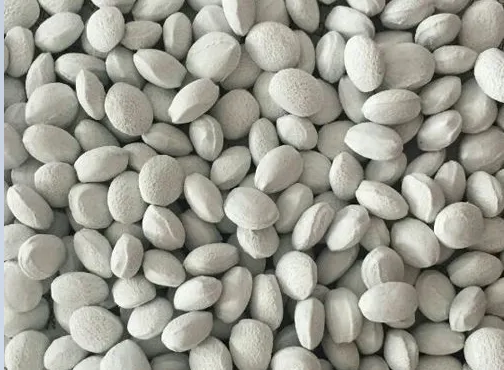
Before understanding how desiccant masterbatch works, it is important to recognize the impact of moisture in plastics.
Surface bubbles and pinholes
Fish eyes in films
Poor transparency
Reduced tensile strength
Unstable extrusion pressure
Hydrolytic degradation of polymers
These defects not only lower product quality but also increase scrap rates, downtime, and production costs.
The core function of desiccant masterbatch is chemical and physical moisture absorption.
When heated during plastic processing:
The desiccant particles inside the masterbatch become activated
They react with or absorb free water molecules present in raw materials
Moisture is converted into stable compounds or trapped within the desiccant structure
For example, calcium oxide reacts with water to form calcium hydroxide, effectively eliminating free moisture from the polymer melt.
Unlike traditional drying equipment that removes moisture before processing, desiccant masterbatch works during melting and mixing.
This in-process drying offers several advantages:
Eliminates residual moisture missed by pre-dryers
Compensates for poor storage conditions
Handles recycled or filler-rich materials with high moisture content
Because the desiccant is pre-dispersed in a carrier resin, it blends evenly with base polymers. This ensures:
Consistent moisture removal
Stable processing conditions
No localized defects caused by uneven drying
High-quality formulations, such as those developed by RUNME, focus on fine particle dispersion to avoid agglomeration or surface defects.
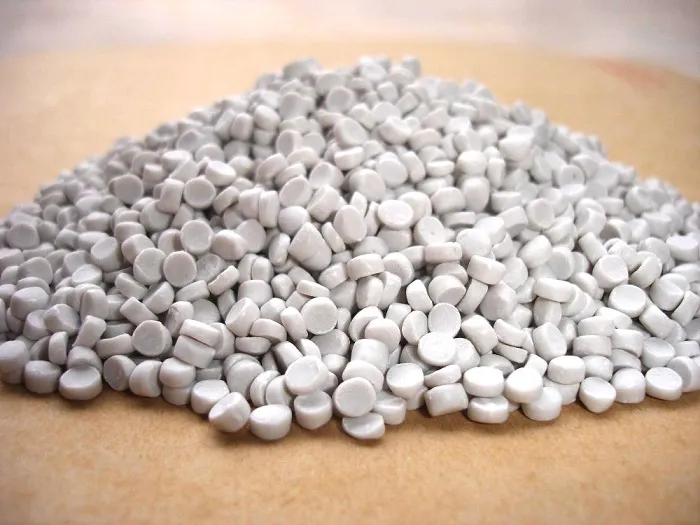
Most widely used
High moisture absorption capacity
Cost-effective
Suitable for PE, PP, and recycled plastics
Lower reactivity
More controlled moisture absorption
Used in applications requiring smoother surfaces
Combines moisture absorption with processing aids
Improves flow and dispersion of fillers
Plastic desiccant masterbatch is widely used across multiple industries.
Eliminates bubbles and pinholes
Improves film transparency and uniform thickness
Prevents silver streaks and voids
Enhances mechanical strength of molded parts
Stabilizes melt pressure
Improves surface finish
Recycled materials often contain high moisture levels due to washing and storage. Desiccant masterbatch:
Compensates for inconsistent drying
Improves output quality
Reduces rejection rates
By reducing or eliminating the need for pre-drying, manufacturers save on:
Electricity
Equipment maintenance
Production time
Consistent moisture control leads to:
Better surface appearance
Higher mechanical performance
Lower defect rates
Faster startup
Fewer interruptions
More stable processing parameters
Compared with investing in large drying systems, desiccant masterbatch offers a low-cost, flexible solution, especially for small and medium-sized processors.
Typical addition rates range from 1% to 5%, depending on:
Moisture level of raw materials
Processing temperature
Product requirements
Excessive dosage should be avoided, as it may affect mechanical properties.
Always ensure that the carrier resin matches the base polymer to prevent:
Poor dispersion
Surface defects
Processing instability
Store in a dry, sealed environment
Avoid long-term exposure to air before use
| Aspect | Desiccant Masterbatch | Traditional Dryers |
|---|---|---|
| Drying method | In-process | Pre-processing |
| Energy consumption | Low | High |
| Equipment cost | Minimal | High |
| Flexibility | High | Limited |
| Effectiveness on recycled plastics | Excellent | Often insufficient |
Many manufacturers choose to combine both methods for optimal results.
Modern desiccant masterbatch formulations are designed with sustainability in mind:
Enable higher use of recycled plastics
Reduce energy consumption
Lower overall carbon footprint
Brands such as RUNME focus on optimizing formulations to balance performance with environmental responsibility, without excessive additive usage.
Plastic desiccant masterbatch plays a vital role in modern plastic processing by providing an efficient, cost-effective solution to moisture-related problems. By absorbing water directly in the melt, it improves product quality, stabilizes processing, and reduces energy consumption.
Understanding how plastic desiccant masterbatch works allows manufacturers to optimize their production processes, especially when working with recycled or moisture-sensitive materials. When selected and used correctly, it becomes a powerful tool for achieving consistent, high-quality plastic products.
Its primary function is to absorb and neutralize moisture during plastic processing, preventing defects caused by water content.
In many cases, it can reduce or partially replace drying systems, but for highly hygroscopic polymers, both methods may be used together.
Yes. It is especially effective for recycled plastics with high moisture levels and inconsistent quality.
When used within recommended dosages, it does not negatively affect mechanical properties and often improves consistency.
It is added continuously during production, mixed directly with raw materials at a controlled ratio.


